
There has been a strong, negative response to the tariffs imposed by President Trump, but tariffs can indeed be a “beautiful word”, when used as the sole means to fund limited government.
After winning the American Revolutionary War, the newly independent States’ political leaders carefully crafted the Constitution to define the role of the federal government, which needed funding to fulfil the three responsibilities that it was tasked:
- a common defence,
- a common market, and
- coining gold & silver for a common currency.
Everything else relating to government was left to each State, whose governments were ultimately controlled by voters through their elected representatives. Through this dual State/federal structure, Americans would exercise the sovereignty previously inhered in English kings that passed to them in the 1783 Treaty of Paris after winning the war for their independence.
Tariffs were purposefully the only source of income for the federal government. The framers were principled, moral men who understood that direct taxes (like income taxes) were unethical for two reasons.
1st – It was theft because they stole a person’s most precious asset, their time on earth spent earning the purchasing power that gold and silver money conveyed to buy their essential needs (food, clothing, education, etc).
2nd – They were immoral if the taxes imposed were forcing people to have their purchasing power spent by the government in ways they did not agree.
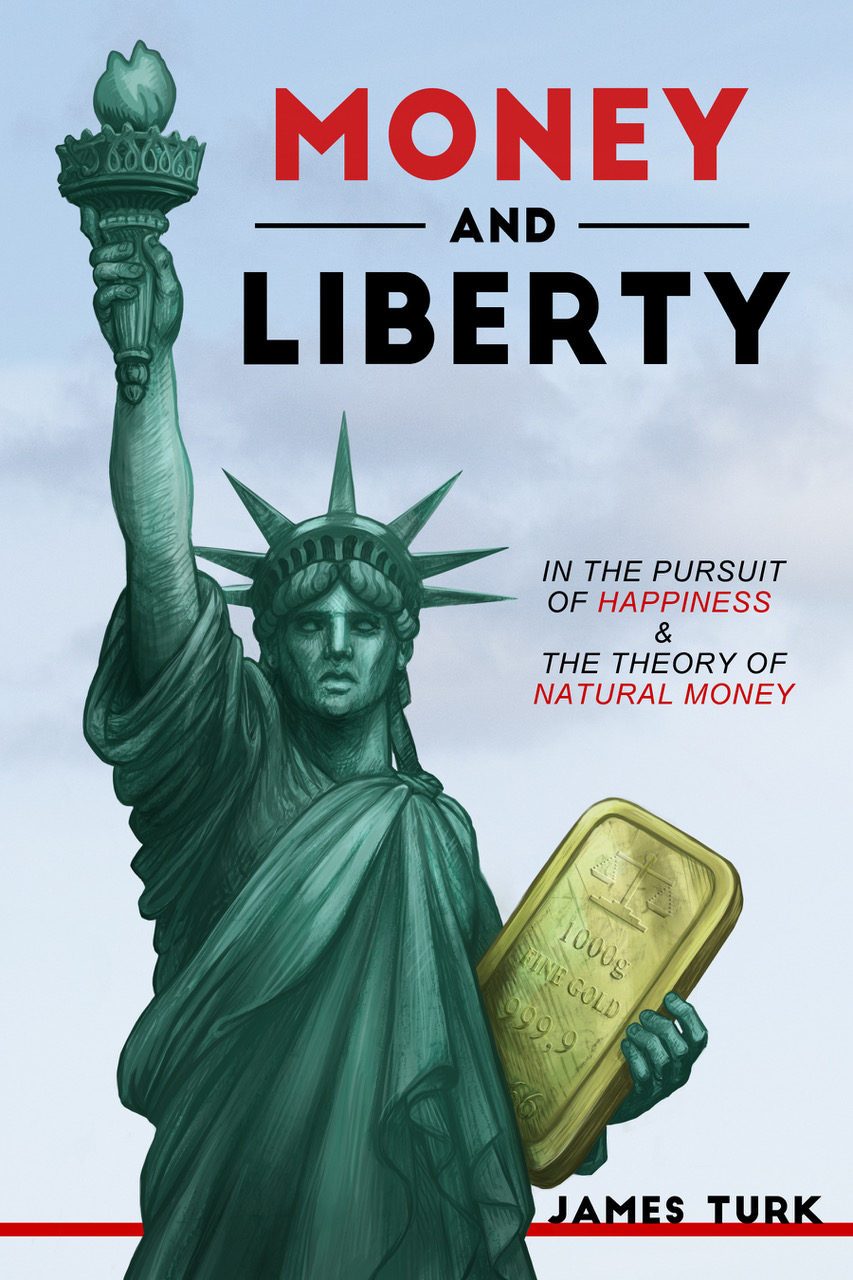
For example, Henry David Thoreau wrote “Civil Disobedience” to explain why he chose jail in 1846 by deliberately refusing to pay a poll tax to protest US government support of slavery, which he feared would be expanded after the Mexican-American War. He argued that individuals should not financially support an unjust government, that they have a moral duty to resist unjust laws of autocratic governments through non-participation instead of rendering heedless obedience. Thoreau reinforced the principle of conscience as a guide to one’s conduct, a point explored in my latest book available on Amazon, “Money and Liberty”. Thoreau thereby cast aside blind compliance to unethical government actions, as intended by the framers of the Constitution and advocated and practiced by Martin Luther King, Ghandi and many others.
Anyone’s aversion to tariffs can be fulfilled by avoiding imports on which tariffs are imposed and instead buying American-made goods.
The arguments against tariffs focus on how they obtrude free trade. I favour free trade within the fifty American States as the framers envisioned and then implemented. But those arguing for global free trade generally ignore its fundamental difference from intra-national free trade.
Countries have different goals, cultures, legal systems, etc. Cross-border free trade is not fit for purpose in a fiat currency world. The adverse consequences are numerous, the most obvious of which is massive government debts arising from unsettled trade obligations that have made possible and then boosted a late twentieth-century phenomenon – sovereign wealth funds.
The insights of the men who carefully crafted the American Constitution are based on first principles. It is tragic that they could not resolve the slavery issue, which was left to leaders like Thoreau and many others to end that wicked practice with the Thirteenth Amendment. But the framers of the Constitution did point the way, showing how tariffs can be purposeful by morally funding a government with limited aims to constrain its reach, which is an outcome more important than cross-border free trade.

 My objective is to share with you my views on gold, which in recent decades has become one of the world’s most misunderstood asset classes. This low level of knowledge about gold creates a wonderful opportunity and competitive edge to everyone who truly understands gold and money.